Let me explain the simple part of the question from Sunil.
In Industry, normally, Soft Iron Gaskets are used as there is a requirement from ASME B16.20/2.3.1 that the hardness of Flange surface higher than that of the Ring Gasket. And the Material specifications Flange Standard (B16.5) are silent on the hardness of Flange face.
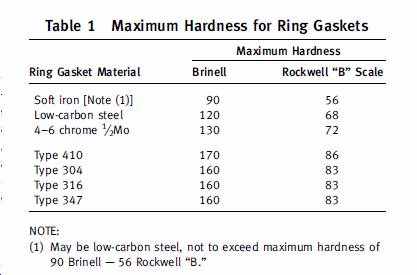
If you notice the standard allows use of CS in place of Soft Iron provided the hardness requirement is complied with. This implies there is a difference between Soft Iron and CS gaskets based on the hardness achieved in the final product only. This is the reason sometimes Client Specification call for minimum hardness 30 BHN higher than the Ring Gasket in order to comply this requirement.
Regarding the bolt torque for Soft Iron gasket vs. CS gaskets, let me clarify that the Torque requirements depend on Bolt Material only. A detailed procedure/guideline is given in ASME PCC1. The only value change here is the prestress before application of Bolt Torque. You may have to refer to Nonmandatory Appendix S (BPV Sect.VIII/1) for deciding the prestress. There is a precautionary note given in Appendix-S regarding the Gasket crushing due to higher prestress. But in any case, the Bolt Torque is solely dependent on Bolt material and friction factor (sometimes, lubrication/Bolt coating is used to control the friction.)
Best Regards,
Prasad Joshi
From: Pankaj Minhas
Sent: Friday, July 17, 2020 9:11 AM
To: Materials & Welding
Subject: [MW:31150] Re: Ring Gasket: Soft iron gasket vs. low carbon steel gasket
A question on the same line. What is the impact on bolt torquing since we are using a soft iron gasket ? Will it be similar or less ?
On Wednesday, July 14, 2010 at 4:09:43 AM UTC-4, Bathula Raghuram (Mumbai - PIPING) wrote:
you understanding is correct, (refer note 1 of below table). hardness is the only difference
On compression of the flange assembly, it is imperative that the ring type joint be significantly softer than the flange groove so that the gasket plastically deforms and not the groove. The use of harder ring type joints can result in flange groove damage. For this reason, ring type joints are supplied with the following maximum hardness values:
From: material...@googlegroups.com [mailto:material...@googlegroups.com] On Behalf Of Agrawal Sunil (Mumbai -Stequ)
Sent: Wednesday, July 14, 2010 12:24 PM
To: 'material...@googlegroups.com'
Subject: [MW:5978] Ring Gasket: Soft iron gasket vs. low carbon steel gasketAs per ASME B16.20, for ring gasket material, Soft iron gasket as well as Low-carbon steel gasket are mentioned, see below table from ASME B16.20
Can anyone, guide me what is the difference between SOFT IRON gasket and LOW CARBON STEEL gasket. As far as I know, SOFT IRON is having carbon content less than 0.1% and hence it is nothing but low carbon steel only.
Request opinion from group members.
Best Regards,
Sunil Agrawal
TICB

--
https://materials-welding.blogspot.com/
https://www.linkedin.com/groups/122787
---
You received this message because you are subscribed to the Google Groups "Materials & Welding" group.
To unsubscribe from this group and stop receiving emails from it, send an email to materials-welding+unsubscribe@googlegroups.com.
To view this discussion on the web visit https://groups.google.com/d/msgid/materials-welding/fa49e750-64b1-47b2-99e5-fb8ae20f451eo%40googlegroups.com.
Comments